Dalal, Janetos, Summa Named K12 Scholars
For Keith Summa, MD, PhD, a passion for clinical and translational research began during his undergraduate years.
“A discussion with my freshman-year biology professor sparked an interest that ultimately changed the trajectory of my career aspirations,” said Summa, an assistant professor of medicine in the Division of Gastroenterology and Hepatology.
That then-newfound passion led to Summa’s current research, which aims to advance understanding of disease development and improve clinical care.

My current research focuses on understanding how disrupted sleep and circadian rhythms affect the gastrointestinal tract and increase susceptibility to diseases.”
“My current research focuses on understanding how disrupted sleep and circadian rhythms affect the gastrointestinal tract and increase susceptibility to diseases such as inflammatory bowel disease and irritable bowel syndrome,” said Summa, who was recently named a K12 scholar at the Northwestern University Clinical and Translational Sciences (NUCATS) Institute. “While it has long been appreciated that poor sleep is common in patients with inflammatory bowel disease and that night-shift work increases risk for gastrointestinal disorders, little is known about the processes underlying those observations.”
Summa joins Timothy Janetos, MD, an assistant professor in the Department of Ophthalmology, and Vidhi Dalal, MD, an assistant professor in the Department of Pediatrics, as K12 scholars at the NUCATS Institute. The Multidisciplinary Career Development Program (K12, formerly KL2 award) is sponsored by the National Center for Advancing Translational Sciences and supports early-career faculty at Northwestern. The program is designed to train a diverse workforce of investigators to drive innovation and implement effective clinical and translational research.
The NUCATS K12 program has provided protected time, structured mentorship and interdisciplinary training necessary to advance my development as a clinician-scientist.”
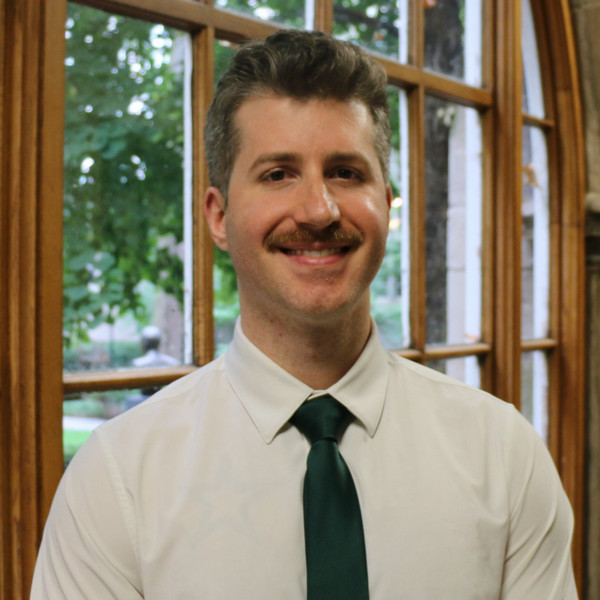
“The NUCATS K12 program has provided protected time, structured mentorship and interdisciplinary training necessary to advance my development as a clinician-scientist,” Janetos said. “Equally important, the program has connected me with a diverse mentorship team and a broader community of translational researchers.”
Janetos’ research is motivated by a fundamental gap in ophthalmic care: While many eye diseases require long-term, repeated treatments, there are limited strategies to support patients in adhering to these often-demanding care regimens.
“The key question driving my work is how we can identify patients at the highest risk for nonadherence and design practical, scalable interventions that improve care delivery without increasing burden,” he said. “Addressing this challenge is critical, because even the most effective treatments cannot work if patients are unable to receive them consistently.”
Dalal, a pediatric nephrologist, said her work is inspired by her experiences as a clinician.
“The drive to personally care for children with kidney disease while also seeking to have a broader impact on advancing their care through discovery solidified my ambition to pursue a career as a pediatric nephrologist and translational scientist,” Dalal said.
Dalal’s K12-supported research aims to address pediatric steroid-resistant nephrotic syndrome, a kidney disease that causes patients to lose large amounts of protein in their urine. The condition is difficult to treat, with approximately 50% of affected children progressing to end-stage kidney disease within 15 years of diagnosis.
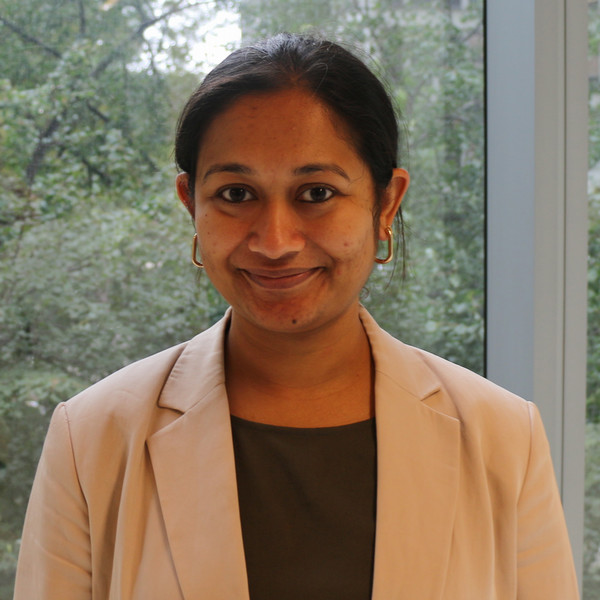
A better understanding of how the primary disease process replaces functional kidney tissue with scar tissue is critical to developing new treatments that prevent patients from developing kidney failure.”
“A better understanding of how the primary disease process replaces functional kidney tissue with scar tissue is critical to developing new treatments that prevent patients from developing kidney failure,” Dalal said.
This cohort joins three scholars named in 2024 in programming that includes robust mentoring teams to assess the educational needs of each individual while providing personalized career development opportunities.
“The NUCATS K12 program has been instrumental in allowing me to advance my research from experimental models to humans,” Summa said. “With the program’s support, I will be positioned to conduct research that is both relevant to patients and capable of impacting their care.”
Research reported in this publication was supported, in part, by the National Institutes of Health’s National Center for Advancing Translational Sciences under grant No. K12TR005104. The content is solely the responsibility of the authors and does not necessarily represent the official views of the National Institutes of Health.