How Collaboration Can Lead to Medical Innovation with John Rogers
Some of the most successful biomedical innovations from the lab of John A. Rogers, PhD, are the result of an email or phone call he received from a clinician, with a real-world problem impacting patients. In this episode, Rogers, a Northwestern University biomedical engineer, whose work involves novel material science, talks about his collaboration with the medical community and why his often-untraditional approach to academic research is helping to accelerate translational science.
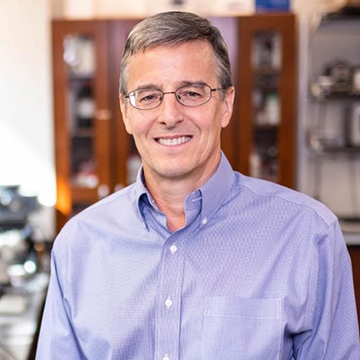
We have mechanisms in place so (successful research) doesn’t just get stuck in a paper, published in a journal that somebody puts on their shelf, but it actually can move into the real world and be helpful to people.”
Read the Full Transcript
[00:00:00] Erin Spain, MS: Welcome to Science in Translation, a podcast from NUCATS, Northwestern University Clinical and Translational Sciences Institute. I'm your host, Erin Spain. This season on the show, we're exploring how collaborations across schools and institutes at Northwestern University leads to truly transformative translational science. Joining me today is John A. Rogers, a Northwestern University scientist whose research combines expertise from nearly. Every traditional field of study in science and engineering with outcomes that have the potential to improve human health and change the way people think about consumer and medical devices. We're going to discuss the interdisciplinary collaborations that have led to some of his most notable discoveries and why he thinks Northwestern's ecosystem. Is a place where translational science and innovation thrives. Professor Rogers is the Louis Simpson and Kimberly Query professor of materials science and engineering, biomedical engineering and neurological surgery with appointments in the McCormick School of Engineering and Feinberg School of Medicine. He is also the founding director of the Querrey Simpson Institute for Bio Electronics. Welcome to the show, John.
[00:01:22] John A.Rogers, PhD: Yeah, thanks for having me.
[00:01:24] Erin Spain, MS: Your lab has developed a remarkable portfolio of technologies from soft wireless monitors for premature babies in the NICU to most recently, the world's smallest battery free, fully dissolvable pacemaker. How do you describe the work that's taking place in your lab today?
[00:01:41] John A.Rogers, PhD: Well, you know, it's biomedical engineering, I think, founded on novel material science. I mean, that's kind of my core expertise. But we like to think about materials in the context of new classes of devices, ultimately those that can be put into systems that can benefit patients. And so it's very translational. I think it's in its orientation, you know, we're very, excited and enthusiastic about, kind of fundamental academic science and. Publishing papers and providing a rich educational environment for our students. But I think we measure our ultimate success in terms of what makes it out of our labs and into the hands of healthcare professionals where the technologies could benefit patients at scale is what we aim for. We don't always achieve that. I mean, we're doing pretty risky stuff in general, but. If we get a few hits, as measured in that way, then you know we feel pretty good about what we're doing.
[00:02:33] Erin Spain, MS: You were brought to Northwestern because you were known for accelerating interdisciplinary activities at this interface between engineering and medicine. And much of your work also revolves around improving the effectiveness and reducing the cost of clinical medicine. What made Northwestern the right place for you? To pursue this type of interdisciplinary innovation.
[00:02:54] John A.Rogers, PhD: I think it involves a blend of different factors and all of them have to be right in order to create that kind of ecosystem to facilitate this sort of work. I think at the foundations you need world class science and engineering and I think we have that here at Northwestern. You need a large engagement. Curious energetic and ambitious medical community, you know, and I think we have that as well through our medical school, but also the broader medical environment that we have. With Shirley Ryan Ability Lab and other institutions here in the Chicago area. So, a really vibrant environment for that. And then finally, as it's impacted me personally, I think you have a lot of individuals with resources who are interested in helping translate things out of the academic lab. And, they're engaged in meaningful ways and prominent trustees and alums and smart people who want to help out in different ways. So, you know, it's a number of different factors. You know, the most important people though, all of us are the students and we get great students, really fantastic young people. Bring the energy and the fresh ideas and and just the ambition, to make an impact. And I think all of those things together make Northwestern and the broader, Chicago land environment really fertile ground for this kind of thing.
[00:04:05] Erin Spain, MS: Let's talk about some of these breakthroughs. A lot of them are the result of a clinical challenge, like the need for better monitoring in the NICU, or safer temporary pacemakers. Talk to me about how the clinicians that you interact with, how their insights really do inform the direction of your approach.
[00:04:24] John A.Rogers, PhD: we try to maintain a mix and I don't know what is right, I would say two. Projects within our group have a direct tie to a clinical collaborator where we're trying to solve a specific clinical problem that has requirements and performance attributes and cost structures that are gonna determine whether the results could really be a benefit. But then the other third, you know, it's just kind of blue sky, crazy, exploratory stuff I think is important to maintain an open mind around what may be useful in the future things that clinicians might not even perceive today as being a valuable, so just, feeding the pipeline of options that we can offer to clinicians who approach us with a challenge that they're facing in the care of their patients. So again, I think it's like a two third, one third type. Type of split roughly. And the clinical projects that we're involved in, I think in all cases represent opportunities that are brought to us as opposed to us running around and trying to sell our technology to the community. I think that can work. But in practice, I think we have better success when clinicians are describing to us a specific problem, and then we can figure out whether we have a unique capability or materials or device design that would address that need. So we get a lot of inbound inquiries and per this interview if you have a problem and you think we might be able to solve it, reach out to me. I think I respond to every single inquiry and email.
[00:05:48] Erin Spain, MS: You're willing to take an email and listen to what someone has to say and see if it could possibly align with some of your projects. Is that right?
[00:05:56] John A.Rogers, PhD: Yeah that's right. I mean, it can't solve every problem, obviously, but, we're interested in trying to solve problems where we think we have the capacity to do that. You know, It still has to be in a PhD thesis, publishable type of. Regime. It can't be, off the shelf devices. It can't be a simple widget you could put together in your garage. It needs to be sophisticated at some level that can engage a graduate student or a postdoc. It also has to fall in the realm of what is possible as defined by the laws of Thermodynamics and physics. So, you gotta find a sweet spot and you also have to find the right collaborator. I mean, clinicians in general, nurses and so on are super busy. Some of them have protected time and the capacity to engage, and work with us in the development of a new technology. Not everyone. So you try to pick your spots and launch collaborations where you think you can make meaningful progress. But we've had no shortage, you know, and, uh, probably an excess of things that we can take on, but. Pretty happy with those interactions. I think they've been very successful from both sides of the equation, the engineering, science and the medical practice, and a number of examples of that.
[00:07:00] Erin Spain, MS: Why is it so important to have this open mind and to be able to listen to people and really read the email, respond to them, interact, build that trust and that you have that reputation? Why is that important to
[00:07:11] John A.Rogers, PhD: Well, I think we're in a position where we can afford to do that in a sense. We have discretionary funding streams that allow us to opportunistically go after a research problem that's proposed to us or a technology development effort without going through the long cycle of writing a proposal. That serves as like the seed capital to get these things started quickly. And I think being able to execute and start work almost immediately after a conversation. I think that's really, energizing and maybe encouraging from the side of the, clinical, in interface that we don't have a discussion and then a year later, maybe we have some funding and maybe we could get started. We can really get out there and get going, and then that. You know, initial data, if it's successful, serves as the basis for, you know, a proposal that we would write. And so back to this broader ecosystem we have here in the Chicago land area, we do have those kinds of resources.
[00:08:06] Erin Spain, MS: Something else that's really cool about a lot of your technologies is that they can be repurposed sometimes in surprising ways. Can you share some examples of that? And is this intentional? Are you intentionally designing technologies and platforms that can be adapted and as new problems to your desk?
[00:08:23] John A.Rogers, PhD: we're trying, as academic researchers, to establish foundational capabilities, not just rifle shot devices. Designs to address a specific narrow use case. We're trying to establish materials and manufacturing and design approaches that have a certain breadth associated with them. That's built into the way that we do things. Ultimately, you know, if you're gonna do translation, you wanna build the basis for a commercially sustainable medical technology. It's gotta be super specific and super targeted, but it's built on class. As for foundational knowledge, I guess that, you know, in principle is broadly applicable. I can give you one example of that. We got started in you know, the NICU as kind of our first clinical engagement after arriving here at Northwestern 2016. Actually, we were already engaged with folks at Lurie Children's Hospital a couple years before I made the move. And that was one of the considerations I'd get closer to those collaborators 'cause it was working out pretty well. So the first target was just. Reproduce what's done in the clinic today. So there are predicate devices, but they have all sorts of disadvantages with the adhesives and the wires and the expense and the electronics and all this kind of stuff. So trying to reformulate that kind of measurement modality in a way that's more compatible with the class of patient. But then once you're engaged with folks at a place like Lurie word, get around and then you begin to think. Those vital signs could be useful in other contexts. So for example, we have unpublished work with Amman Shaban, who's a fetal surgeon. You know, he found out we're doing stuff with premature babies and he reached out and said, Hey, we do surgeries on fetuses and there's no vital signs monitoring at all. Go on, during that. Surgery, which is crazy. You think about it, you know, in any kind of operative setting, you know, you're doing all sorts of vital signs. And so he came to us and said, Hey, could you adapt your premature baby monitors for monitoring the fetus? And so it requires a totally different set of materials, totally different geometry, everything else. But I would say reusable or like extendable, you can build on what you've done in the past. So that would be one example. Another one in that same context is assessing quantitative metrics of pain that infants are experiencing. So they're not able to verbalize obviously what they're feeling, but understanding their response to various procedures and their Experience of pain turns out to be a very important metric by which the hospital is measured, and that is currently quantified by survey forms that the nurses fill out. What is the facial expression? How loud is the crying, how much is the body moving, and things like that. And you come up with a pain score. So the question was, could we make it a more data-driven quantitative? Assessment of pain by taking the vital signs and then extending them. You think about heart rate or cardiac amplitude, you know it's changing with pain levels and you can think about surface skin temperature, surface blood flow. You get flushed when you're experiencing pain. And so we added a bunch of sensors on top of the basic vital sign sensors that we had, and we're now assessing those for quantifying pain with Debbie Weiss Meyer and Susan Slattery. So we just submitted a mean. script very recently on that work. And we have a paper that's in press with Dr. Shaban and his team about vital signs, monitoring of fetuses during a fetal fetoscope surgery. So anyway, just a couple of examples. A lot of instances like that you get started and then suddenly people realize, oh, you can do X, Y, and Z. How about you add another capability and repurpose it for a different use case. You can quickly develop a lot of momentum that way.
[00:11:47] Erin Spain, MS: with these monitors, I mean this has also gone international. Can you talk about that? You've been able to create these at a lower cost to be deployed in low and middle income countries?
[00:11:56] John A.Rogers, PhD: Yeah we're, and so that's not through my research group anymore. That kind of outstrips, you know, what we can do as an academic group. We did an initial deployment in Zambia at the end of 2019. We could do that with graduate students in support of the Gates Foundation and the Save the Children Organization. But to scale, you really have. To have a separate entity with professional engineering staff and quality control managers and all this kind of stuff. So we've done that. We have a company called Cyber Health located here in the Chicago area and they're executing and extending and productizing, I guess a lot of the demonstration vehicles that have come out of our labs. So they're in 20 countries at this point they're doing mostly maternal fetal and neonatal health monitoring. And so I was out there as recently as January, we're deploying our maternal fetal monitoring systems into Rwanda, Kenya, and Nigeria. So I was out there with the cyber health team to watch how that's going. The interesting thing is cost, of course, is an overriding metric. When you think about performance from an engineering standpoint, it's not just measurement quality, but the cost. If it's not appropriately priced, then it's irrelevant for these parts of the world. So you really have to look at it very carefully. It turns out that reusability and rechargeability and the devices are the only way to do it, because then you can amortize the cost of the device over hundreds of cycles of use and get the cost per patient into a realm that turns out to be feasible. But the interesting thing is the exact same technology that's going into Kigali Rwanda, for example, is going into Copenhagen and Denmark because the Denmark government selected the Sibel wireless health monitoring systems as the standard that will be used across the healthcare system in Denmark. And so that was an open sort of competitive process. Sibel submitted their technology in partnership with Dragger as a German metal device company, and they were. As the top choice. So it's really a remarkable thing. You have devices in Denmark and Rwanda at the same time. We have devices in our hospital systems here in Chicago, so everything is gold standard quality and accuracy and applicable across like incredibly diverse countries and environments In terms of resourcing.
[00:14:06] Erin Spain, MS: How important is it for the students that are training in your lab and the graduate students, the trainees, to see this kind of progression? We're talking a little less than a decade, coming from an idea in the lab to now really around the world Success.
[00:14:21] John A.Rogers, PhD: There's a clear distinction between what we're doing in our lab and what's going on in the companies. But there's a flow obviously, right? A lot of the technologies are moving from the lab to the entities that are doing commercialization. But to your point, I think. They're energized by it because it illustrates to them that if their technology that they're working on on the bench top in the lab, grinding away, most things don't work. You finally get something that works. They can have confidence that we have mechanisms in place so that it doesn't just get stuck in a paper, published in a journal, somebody puts on their shelf, but it actually can move into the real world and be helpful to people. So I think most people are drawn to us. Teams are inspired by that style of academic work leading to meaningful technologies, even if they're not directly involved in it.
[00:15:08] Erin Spain, MS: What do you think Northwestern University is doing to continue to cultivate that culture? Can you talk about that a little bit
[00:15:15] John A.Rogers, PhD: Yeah, very collaborative uh, culture is, is my experience. We have a lot of things happening through our info office of all sorts. Programs and funding vehicles and help with, you know, riding business plans. And we have the garage, which is a great, fantastic, mechanism for undergraduates primarily to get in, get involved in, and think about startups. So. There's a very vibrant collection of mechanisms and programs and people who are interested in moving in this way. And I think a lot of the new hires that are coming in are continuing to move us in that direction. Because they're kind of drawn to see all these things happening and they wanna be part of it. So I think it's good for everyone in terms of scientific research. I mean, some would say, wow, you're kind. The corrupting, the ivory tower, kind of style. But I think it makes science better, having some kind of built in guardrails on what sorts of topics you choose to pursue based on scientific questions whose answers at least have the potential to lead to a technology that could be broadly meaningful, medical or otherwise. And I got my career started at Bell Laboratories, and I think they set the standard for kind of doing that. So probably the most successful physical sciences laboratory in the history of the world. It was 10, 10 Nobel Prizes coming out of it, but it wasn't just pure ivory tower old school university research. It was Nobel Prize winning research. But in the context of. Technology requirements associated with building out a telecommunication infrastructure for the nation. And I We try to adopt that kind of Bell Labs mindset, in our own group and thinking in that way.
[00:16:46] Erin Spain, MS: How do you talk to these young scientists and students who, they're just coming into this environment, maybe they're nervous about pursuing some ideas that challenge conventional thinking. How do you, you know. Mentor them and help them to, you know, see what's possible.
[00:17:00] John A.Rogers, PhD: young kids come in, they wanna do something new, you know, they don't want to do the old stuff for the most part. And then you insert them into a team of people who are all doing kind of novel new stuff and trying to break new ground. And it's hard not to get on board with that, and so I say that, but you know, there's kind of a built in filter because the people who are approaching me about joining our group are already, you know, in the mindset of thinking innovation and out of the box type stuff., I'm creating an environment that, encourages that but I'm not actively molding them and trying to change their mindset. They're already eager to consume this sort of thing. And I try to provide an environment that facilitates that.
[00:17:38] Erin Spain, MS: . There's been just so many innovations coming out of your lab recently, and you just mentioned a few more that haven't been published yet, some new things coming. What are you most excited to tackle and how will translational science play a role?
[00:17:51] John A.Rogers, PhD: I think in general we would like to understand how to do translation in the context of implantable devices. We don't have a lot of experience in it. We're still working on all kinds of, minimally invasive skin interface devices. You take 'em off at the end of the day, there's really almost no risk, and you can do a lot with that. And we're still working in that direction. I think looking at biochemical species and sweat, it's a frontier that we're pretty excited about. Looking at gaseous flux of molecular species coming off the surface of your skin. That's another new one that we think is pretty exciting. So getting into the space of biochemical assessments of health status beyond kinda the biophysical sensors that we focused on, primarily up to this point, , but as you mentioned, you know, these tiny pacemakers, we have all kinds of different, you know, implantable devices look pretty, pretty good, in terms of clinical utility use case requirements alignment, between the, engineering and the clinical needs. But how do you get approval first in human studies and then how would you eventually go down the path of getting FDA regulatory approval? We're still working through that. I guess we're both excited about that set of possibilities, but also trying to work through it. And you can think about it in this way. So if you have a skin mounted device that basically works to get FDA approval, let's say if it's a five 10 K, submission, which means there is a clinical predicate, so you just have to show equivalency in terms of the measurement capabilities, that's probably a year and a half, and one and a half million dollars and about a thousand pages of documentation you submit to the FDA. You get it? For an implantable device, it's more like 10 years, a hundred million dollars. So it's a whole different realm and figuring out how to do that and finance it and de-risk it. We're moving in that direction, but that's a daunting one. But I think there are places where we think we could benefit patients.If we could get, you know, that, that going down, down that path. So, that's something that we need to continue to think about.
[00:19:41] Erin Spain, MS: How would you complete this sentence at Northwestern, collaboration isn't just something we do, it's.
[00:19:48] John A.Rogers, PhD: I think it's just part of the culture here. It's the way that we pursue grand challenges. It's really just built into the way the place operates, you know, it's hard to avoid It
[00:19:58] Erin Spain, MS: Thank you so much John Rogers for being on the show. We
appreciate your time.
[00:20:01] John A.Rogers, PhD: Thank you very much for having me.
[00:20:03] Erin Spain, MS: Subscribe to Science in Translation wherever you listen to your podcasts. To find out more about NUCATS, check out our website, NUCATS.northwestern.edu.