Why Mastering Your Craft Comes Before Leadership with John Pandolfino, MD
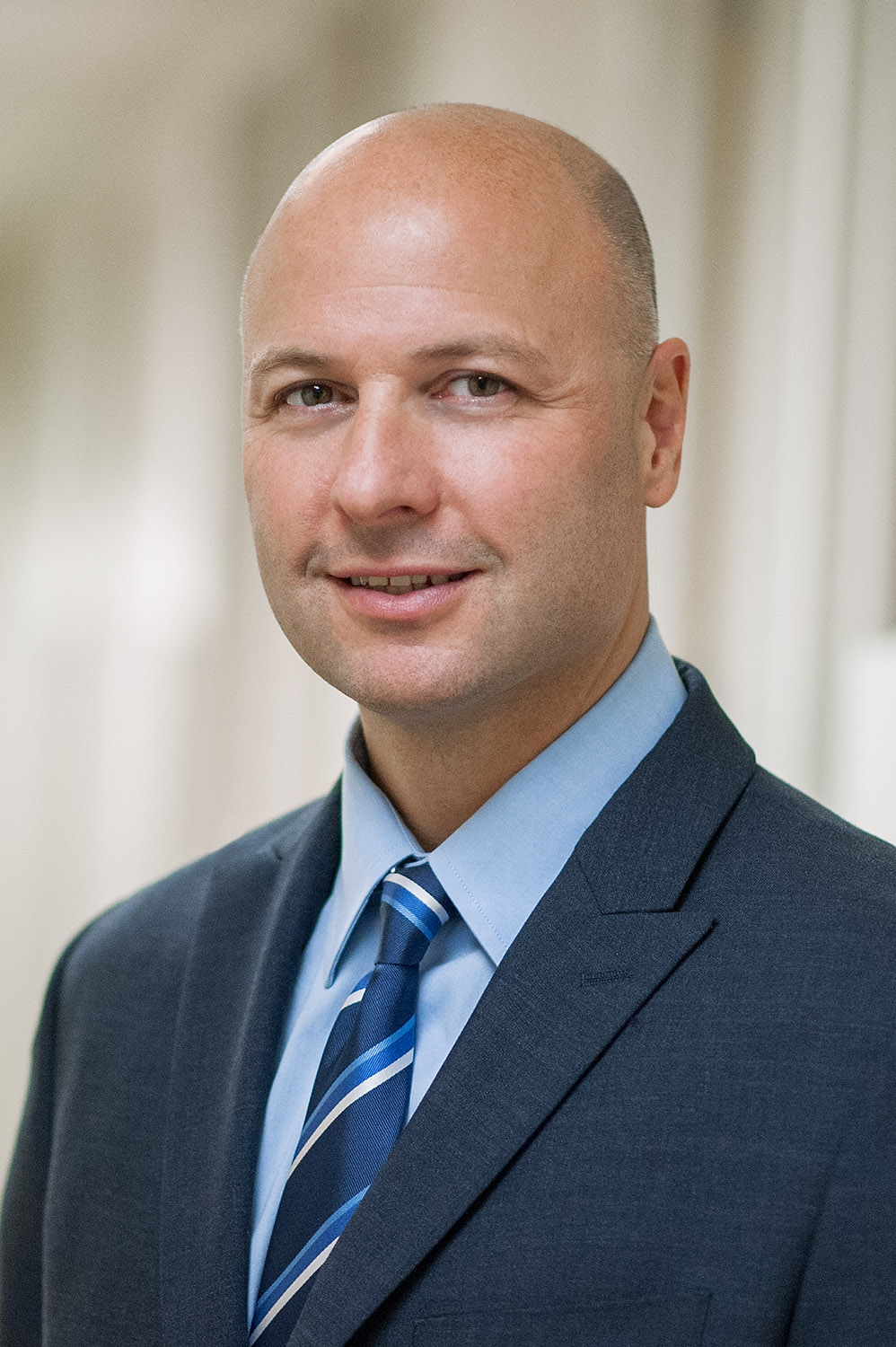
What does it take to build a successful career in translational science and grow into an effective leader? John Pandolfino, MD, Chief of Gastroenterology and Hepatology in the Department of Medicine at Northwestern University Feinberg School of Medicine, shares his journey from curious young physician to internationally recognized scientist and division leader.
In this episode of Science in Translation, Dr. Pandolfino discusses the mentors, collaborations, and clinical research training that shaped his career, including Northwestern University’s Master of Science in Clinical Investigation program. He explores how his research is advancing patient care through artificial intelligence, digital twins, and a deeper understanding of the gut-brain connection. He also shares lessons on leadership, building trust, developing meaningful collaborations, and why mastering your craft should come before pursuing leadership roles.
Subscribe to Science in Translation on Apple Podcasts, Spotify, or wherever you get your podcasts.
You don't really realize how interesting it is to deal with so many different people, deal with real problems that people are having every day and try to come up with solutions. I really just think of it just as another, higher level of research.”
John Pandolfino, MD
- Chief of Gastroenterology and Hepatology in the Department of Medicine
- Hans Popper Professor Professor, Medicine in the Division of Gastroenterology & Hepatology
Read the Full Transcript
[00:00:00] Erin Spain, MS: Welcome to Science in Translation, a podcast from NUCATS, Northwestern University Clinical and Translational Sciences Institute. I'm your host, Erin Spain. This season on the show, one of the topics we're exploring is the path physicians and scientists take to build careers that bridge scientific discovery and the care of patients. Dr. John Pandolfino has spent much of his career doing exactly that. He is the Hans Popper Professor of Medicine and chief of gastroenterology and hepatology at Northwestern University Feinberg School of Medicine, where his research has helped change how physicians understand, diagnose, and treat disorders of the esophagus. But his path to becoming a physician-scientist was shaped over decades by mentors, by questions that emerged from caring for patients, and by training that helped him turn those questions into rigorous clinical research. He earned his Master of Science in Clinical Investigation at Northwestern, a program that's now sponsored by NUCATS, and has gone on to become a mentor and research leader himself. Today, we'll talk about that journey, how collaboration has shaped his science, and what he's learning about moving an idea from the clinic into research, and ultimately back to patients. Welcome to Science in Translation, Dr. Pandolfino.
[00:01:23] John Pandolfino, MD: Nice to be here.
[00:01:24] Erin Spain, MS: Let's take us back to the beginning. You grew up in New York, there were no physicians in your immediate family. Where did your interest in medicine come from and what set you on this career path into Northwestern?
[00:01:36] John Pandolfino, MD: It's an interesting beginning, I believe, because I didn't have many role models, although I do remember my pediatrician when I was a kid, and I really did think he was really awesome. I never really feared going to the doctor when I was a kid because I always thought he was just such an impressive person. So I guess you could say that I was somewhat indoctrinated by my pediatrician and impressed just by the person that he was. But yeah, I didn't have physicians in my family. I was the first person to go to college and then obviously go to graduate school. But I jokingly tell people that my parents sort of brainwashed me. I never really asked for a chemistry kit or an invisible model of the human body as birthday gifts or Christmas gifts, and they seemed to make their way. So I think my parents kind of subconsciously—or they were conscious, but maybe to get into my subconscious—thought that I would like medicine.
[00:02:24] Erin Spain, MS: That's fantastic. And coming from the East coast, how did you end up in the Midwest?
[00:02:28] John Pandolfino, MD: So that's also an interesting, funny story because my parents knew that I had a lot of bad influences in Brooklyn. I wasn't the best kid in the world, I have to admit that. And my parents definitely knew that they wanted me to leave New York and get away from my friends. A lot of them probably were not the best influences, and my dad had this fixation with the University of Chicago because of Enrico Fermi, a great Italian scientist. And really that was the only choice I had for college. I looked at other schools, but when it really came down to the decision, my dad was pretty much adamant that if I was going to go someplace and he was going to help me pay for it, it was going to be the University of Chicago.
[00:03:02] Erin Spain, MS: Okay, so it sounds like your parents really were your true first mentors in many ways, including career mentors. It sounds like they led you down this path.
[00:03:09] John Pandolfino, MD: Yeah, definitely, even though I wasn't a great kid, I definitely listened to my parents and especially when they were angry with me.
[00:03:15] Erin Spain, MS: And, what's their impression of what you're doing today?
[00:03:17] John Pandolfino, MD: Very proud. They say, in particular my mother, she's like, I wish I could go back to your third grade and fourth grade and fifth grade teachers and show them where you are now, because they would not believe it.
[00:03:27] Erin Spain, MS: Where did they think you were going to be?
[00:03:29] John Pandolfino, MD: I jokingly tell people that my third grade report card, and this is true, said John will either be governor one day or a master criminal. And I remember that clearly.
[00:03:39] Erin Spain, MS: You proved her wrong on the master criminal thing, and here we are: a physician, and not only a physician, you are leading the Division of Gastroenterology and Hepatology here at Northwestern. Can you describe what you're doing today and maybe what a typical day is like for you, if there is a typical day?
[00:03:55] John Pandolfino, MD: I tell people I have a really amazing job because I don't do the same thing every day. I've got a lot of interactions across the hospital, the university, and the medical school. So no day is really the same. There could be one day where I'm working heavily in my research with my mentees and my colleagues and going through data analysis, designing studies, and thinking about interesting hypotheses. And then the next day I could be seeing patients and doing procedures—very invasive procedures which really have a dramatic and almost an immediate impact on how people do in terms of their symptoms and their overall natural history. And then, you know, the next day it could be purely administrative. And I have to say, if you had asked me before I did any of this when I was in medical school if I wanted to be an administrator, I probably would have said no. But you don't really realize how interesting it is to deal with so many different people, deal with real problems that people are having every day, and try to come up with solutions. I really just think of it as another higher level of research. So every day is different. It's different on purpose, but also different just because things come up.
[00:04:57] Erin Spain, MS: That's really interesting, that observation, that it's an extension of your work in research. When did research become an important part of what you wanted to do with your career?
[00:05:06] John Pandolfino, MD: I didn't give it much thought in medical school. It really wasn't until, I guess, I was on the wards at Northwestern as an intern and there was a specific issue that was occurring with patients and we were looking at specific lab values, and I just noticed that there was a trend in this specific leukemia called hairy cell leukemia on cholesterol levels. And if the cholesterol levels were really, really low, these people were doing horribly. And I just thought it was really cool to be able to see those patterns. My mom's an artist, so I always had this kind of feel for patterns. And I thought it was really cool that I could do this, and I wrote a paper and that really inspired me. But then, just meeting other people as I progressed... my mentor eventually, Peter Kahrilas, just watching him think through a problem, come up with a solution, and design an experiment—I don't know, something just clicked and I really enjoyed the cognitive aspect of it a lot. I really loved being a doctor, taking care of patients, and thinking about complex problems, but the research was different and it was really a lot of fun.
[00:06:07] Erin Spain, MS: You mentioned Dr. Peter Kahrilas. He's a professor emeritus now here at Northwestern, former Division Chief. He has been a very important mentor for you. What did you learn from him about the kind of scientist you wanted to become?
[00:06:19] John Pandolfino, MD: I think Peter and I had a really great relationship and were really productive because we were different. Peter was very methodical, very rigorous, probably the best medical writer I've ever worked with. And he was really very detail-oriented. I'm much more of a free spirit. I like to think about different ways of doing things, take risks. I would try things. Some of them would work, some of them wouldn't. But when they worked and I would bring it to Peter—I used to jokingly call it "Peterizing" it—he would just make the argument so much more cohesive. He would come up with things that I might not have thought about and he would make the finished product really exceptional. So we had a really good relationship in that, and because I probably lacked some of that rigor that he had and the real free-flowing and creative writing style that he had, I think we were a really good partnership.
[00:07:05] Erin Spain, MS: Were you working with Peter before you did the Master of Science in Clinical Investigation program?
[00:07:10] John Pandolfino, MD: So I went into the Master of Science in Clinical Investigation program probably early on after I started working with Peter because, once again, I realized I needed to develop a skill set. I needed to develop a better understanding of statistics and a better understanding of how to design a good trial. Also, I needed to learn a lot about the ethics of human trials because you are doing trials on human beings. So that was really something that I did as part of a K award where I was already working with Peter as my mentor to fine-tune a lot of the skills that I thought would be very important in my career.
[00:07:42] Erin Spain, MS: Take me back to that program. What was it like? You're already a practicing physician, and now you're doing this Master of Science in Clinical Investigation program. How difficult was it to balance that, and what changed after you graduated from that program?
[00:07:56] John Pandolfino, MD: When you do that Master of Science in Clinical Investigation program, especially when you do it later on... I had just finished fellowship. I was a junior faculty member. I was really busy clinically because, in the old days when you were just starting out, you were in the hospital all the time doing a lot of call. But then to start taking classes and doing this was hard because you needed to do it after work. I did this with a few other colleagues who were in different specialties, like Manu Jain, who was in pulmonary, and Carol Saltoun, who was in allergy. And it was interesting because we would think about how we would get through our days of work, and then we would come and take these classes with medical students who were studying all day, and, you know, we would be late because we had patients to take care of, and it was interesting that they would give us attitude. So I always thought it was funny.
[00:08:41] Erin Spain, MS: You were like, "You have no idea what you're getting into," right?
[00:08:44] John Pandolfino, MD: We always got our revenge when they started to go onto the wards and they started working for us. So it was interesting, but it was hard. And I wish I would've taken it as a medical student, because then you would've really had much more time to enjoy it. But, needless to say, it was really worthwhile, and it was still fun even though it was at night.
[00:09:01] Erin Spain, MS: Are you still involved with that program at all now?
[00:09:04] John Pandolfino, MD: So I'm more involved in terms of pushing my current trainees and fellows toward that program. I always talk to them about the specific skill sets that you need to develop to be a good translational scientist, to do clinical trials. Now, of course, granted a lot of great education is available online and you can learn a lot of things. But there's something to the projects that you're doing and working with the team; I think it always makes it easier and the impact of those things you learn sticks with you a lot longer.
[00:09:33] Erin Spain, MS: So you've had some trainees go through the program?
[00:09:36] John Pandolfino, MD: Yes. I've had a few trainees go through the program, and they've all completed it. But you know, it took me like three and a half, maybe four years to finish it completely. Most people do it in one or two. It took me a little bit longer because I was so busy clinically at the time and trying to balance my research, clinic, and classes.
[00:09:52] Erin Spain, MS: Describe your research that you're doing now. I know that you've done some work, including the development of the Chicago Classification for how esophageal disorders are classified and diagnosed. You've been working to understand basic physiology of the esophagus into something clinicians can use to guide patient care.
[00:10:08] John Pandolfino, MD: I originally started out as a physiologist, really in GI motility. We were doing very high-level studies on human beings where we would design the actual devices that we were using in our lab, and we would go through the whole process of IRB and getting the device approved as being safe. And then we would essentially perform these very high-level invasive studies where we would interrogate how the esophagus would respond to specific stimuli. And that's really where we started. What happened with me was I wasn't happy enough with just looking at the physiology and how liquid moved through the esophagus. I really wanted to know how it impacted patients. So we really started to coin the concept of translational physiology, where we would actually do these kinds of studies—these high-level physiologic interrogations—with the idea that they were always focused on predicting outcomes: making a better choice for a surgery or an endoscopic procedure. It had to have some clinical impact, whether it was just symptom severity, quality of life, or predicting how people would do after a surgery or a procedure.
[00:11:15] Erin Spain, MS: Tell me about a recent publication using digital twins. This sounds very futuristic. Tell me about that work.
[00:11:22] John Pandolfino, MD: I was lucky enough to run into some unbelievable engineers at the McCormick School of Engineering at Northwestern. One of the things that I think is really important if you're going to be successful in research is really broadening your network and working with different types of people. Early on in my career, I had been working with some very prolific engineers at Penn State, and I always wanted to find engineers that I could work with at Northwestern. And I just happened to run into Dr. Neelesh Patankar, who was around the same age and starting his career at McCormick. He was very interested in fluid dynamics, but he was really focused on how things move through liquid. In fact, he studied fish. I found him by accident. I was just looking through trying to find someone who was interested in fluid dynamics. We started working together. He really improved my appreciation of math and how math was so important in what I was doing. I didn't realize the level that almost anything can be broken down into a mathematical equation. We started working on how we could predict things. And the whole concept always was: could we create a mathematical model, an in silico computerized simulation of the esophagus that we could interrogate and say, "Okay, if we did this to the esophagus, what would happen?" And that would obviate the need for animal studies and human studies, and it would also give us the ability to really get down to what is exactly happening at the mechanical level. We started right away, and they developed this very early model. It was based on putting all these springs together as a machine and looking at simulations. This was really before AI was booming; it was mostly just really brute-force computational simulations. And we would run these simulations for months on the Quest servers at Northwestern, where it would just run a specific simulation that would crash, and then it would try another one and try another one. The engineering students would sit there and monitor what was happening and see whether we were making progress. Now with the advent of machine learning and AI being more popular, we've gotten to the point where we're using physics-informed neural networks or neural networks that are guided by the principles of mathematics and physics. Now, we actually have a model that looks like an esophagus, and it is a computer-generated simulation. And we can now take people's own information from studies and create a virtual esophagus for them. Now what we're trying to do is really look at the dynamic nature of it as it's functioning, like what happens if we tighten the end of the esophagus? Do we prevent people from getting reflux—meaning movement of stomach contents into their esophagus? But what expense does that have on being able to swallow and get food into your stomach? So it's this really yin-yang balance between preventing reflux, but allowing food to go through the sphincter, and it's delicate. You have to let the computer and the math really take hold to actually find what they think or what the computer thinks is the best approach, is the best physiology, the best mechanics to make this happen. So it really is a pretty remarkable thing that's escalated now that we've had better machine learning and better artificial intelligence.
[00:14:36] Erin Spain, MS: Where does that project stand right now?
[00:14:38] John Pandolfino, MD: So right now we're in the midst of an NIH grant. We were able to procure an NIH grant about a year and a half ago. We've got two and a half more years, and what we're doing now is we're taking that first model, which was really a normal esophagus that we could just cut and look at certain things, and now we're bringing it into disease states. So now we're looking at patients with reflux. We're looking at patients with achalasia, and we're looking at whether or not we can actually—one, and this is really important from the get-go—mimic someone's esophagus. So can we take some information that we get from our EndoFLIP device, which measures the geometry of the esophagus and the mechanics of the esophagus? Can we import that into their esophagus? And does it look like their esophagus? If we do a manometry or we measure pressure, does it look like it's real? So it's interesting because it sounds blunt, but say, for instance, we stretch the esophagus, right? And we put a balloon in there and we have to open it up because someone has scarring. When we develop these models, we know that there's a certain pressure that's reasonable that'll do that, that'll crack that stricture and open it up. We have to see that our models develop or at least determine the pressure that would tear the muscle. That makes sense. Is it way too high? Is it way too low, or does it simulate what we're seeing in clinical practice? So we have to get to that level first, and then we can actually take every patient who comes in and say, "Okay, here's the esophagus," and that's the next goal. So I think we're spending a lot of work now getting to the point where we're predicting the real-life occurrences of things, which is really important. And then the next phase will be just to give everyone their own virtual esophagus.
[00:16:14] Erin Spain, MS: And how would this ultimately change care for patients?
[00:16:17] John Pandolfino, MD: The esophagus is a really good microcosm of problems. It's a simple tube, right? And you need to move things from one end of the tube to the other without it going backward in some circumstances. That's found all across the body: your aorta, your blood vessels, right? Your trachea, your ureter, your bladder—like, these are all fluid compartments that need to move liquid. So when you actually look at this tube and you try to think about it, that can be applied across all organ systems that have that. So when you actually think about the problems that people are having and how it would affect it, we could say, "Okay, this person has too much backflow. So we need to strengthen up that sphincter, but we don't want to strengthen it up too much because their esophagus has to push that liquid through." So how tight can we make that hole to prevent the liquid from coming up, but without actually impeding the flow? And you can imagine the aortic valve: same thing. If it gets too tight, they get a lot of pressure in their chest, it affects their left ventricle, they dilate, they get heart failure. What is the diameter that you need to improve the aortic valve to in order to release that pressure and allow that person to live, you know, with being able to exercise and being able to survive and not have a stroke?
[00:17:33] Erin Spain, MS: You've talked about this collaboration with the McCormick School of Engineering and going beyond the traditional things you've studied. You've also worked with psychologists, and you talked about the importance of mathematical modeling and engineering. These sort of collaborations across disciplines—how important is this for you to do the work that you're doing today?
[00:17:53] John Pandolfino, MD: I think they're crucial. If someone would've asked me whether I would've been developing questionnaires for patient symptoms and determining whether different psychological interventions would improve my patients, I would've probably laughed. And it would just be because I wasn't in psychology. I basically thought I could fix everything by fixing the plumbing. I also joke around—and all my friends have heard this joke all the time—but I come from a long line of electricians and plumbers and I kind of stayed in the family business. But I did, I had this very simple mindset where I thought if I could fix people's plumbing, they should get better. And one of the things I saw was that when I was doing my research studies and I was designing them, I was actually improving the mechanics, but the patients told me they were not doing better. I went back and I was looking, and I went really into the weeds on the details, and there were other people in the field... we were all looking at these very small things. And in the end, when you actually talk to the patients, they didn't care about how many times they have heartburn. They don't really care about whether or not a piece of food gets caught per se. They care about whether or not they can go out to have a meal with their family. They care whether or not they're going to be embarrassed by something. What would happen is we might fix things where the fluid and the food could go down better, but they were still very scared that this would happen. Or they had this hypervigilance where every little thing they felt... so now, even though we made it much better, even though we can never make it perfect, they still felt those little imperfections of flow. It bothered them. So we developed this kind of process where now we can stratify: Does someone have a lot of anxiety around their symptoms? Does someone have a lot of hypervigilance where they're really tuned in? And not only can we find those people, now we can actually treat them so that they can have a better outcome. So we look at things not just from the mechanics, but: Do you have a good response mechanically? And are you feeling okay? Are you comfortable? Are you not anxious? Are you not fearful that you're going to sit at home and choke on your own? Can we convince you that you're okay? And that's really where it comes together. I was lucky enough to work with Lori Keefer, who is pretty much the person who developed and, I think, in the modern day operationalized the process of helping people with GI problems by dealing with this vigilance and this visceral anxiety and putting it together real-time in practice. She was seeing tons of patients. She was training a lot of junior people to do this kind of behavioral therapy for these patients, and we became probably the biggest behavioral medicine GI program in the country.
[00:20:27] Erin Spain, MS: And this idea—it's really whole-person care, thinking of the person, like every aspect of what they're trying to accomplish with their life and their health. Can you just talk about that a little bit, maybe, and how your perspective has changed over the years?
[00:20:40] John Pandolfino, MD: If you look at even my research, you can clearly see, like, my reflux line of research. Physiology was really the core of my research when I was a junior faculty member, and then now it's evolved to the psychophysiologic model of GERD. So before, it was just a biomechanical model of GERD—the biomechanics of GERD—but now it's the psychophysiologic model of GERD or the psychomechanical model of GERD, where I'm always thinking that before I even start to think about changing someone's anatomy or their physiology, I always have to get a sense as to what that person's baseline anxiety is. And if they're very nervous, and I can tell that even beforehand, I'll start treating them. Even though they're waiting for an operation, we'll start treating them in parallel so that they'll actually start getting comfortable with the fact that their life is going to change and that they're going to do better.
[00:21:31] Erin Spain, MS: Is there a particular patient story you can think of where this really made an impact and transformed their life by approaching this from that psychological point of view?
[00:21:40] John Pandolfino, MD: Yeah, there are so many good examples of situations where understanding the person had such a dramatic impact in our ability to make somebody better. And it would be on the range of someone who was completely incapacitated by the fact that they were so scared that they were going to choke and die at home that they literally were having panic attacks going into the emergency room. It really wasn't until our behavioral therapist started working with that person. Really telling them like, "Listen, you're able to swallow now; the liquid is moving." Doing two different things: one was cognitive behavioral therapy, where they were really trying to give the person the coping skills, but then hypnotherapy to really get into the mind to let that person know that when they started getting anxious or feeling that things were stuffed, to just visualize that things were moving through like a wave. And this particular person, who was going to the emergency room at least once a week, just stopped going to the emergency room. There were so many examples, because you don't really realize what is happening at home with people on a daily basis. And that's why I think like wearables now... those are at least a step in the right direction because you can see what's happening throughout the day with many people. I always like to tell this other story: I was taking care of this young kid. He had horrible eosinophilic esophagitis, but this is the exact opposite. He thought he was fine. He didn't think he had any problems, but he would get a food impaction. We'd have to come into the ER every now and then, like maybe once or twice a year, and they'd pull the food out, and it didn't bother him. He didn't care. I was talking to him in clinic and I said, "How does this not bother you every day?" He's like, "It doesn't." He's like, "My life is fine." He's like, "I don't care if I have to come in." We were worried, though, because those events could be very dangerous. So then I was just like, "You know what? I want to watch you eat." I'm like, "Because I can't believe that you can eat a cheeseburger. There's no way." So my nurse went down, bought him a cheeseburger, brought it up, and I watched him eat. And what he did was he dunked the cheeseburger in water, he mashed it up, and it was like drinking a shake.
[00:23:36] Erin Spain, MS: Oh no. Yeah.
[00:23:37] John Pandolfino, MD: I was just looking at him. I'm like, "Dude, that's not normal." But it was normal for him. For me, then, I was like, "Wow, I never watch people eat, even though what I'm trying to help people do on a daily basis is to help them eat better." And I thought about it. Like, if I went to a cardiologist with chest pain, they would listen to my heart. If I went to a pulmonologist for shortness of breath, they'd listen to my lungs. If you go to a GI person and you tell them, "I'm having trouble eating," they should watch you eat. So that actually caused us to develop something called a dysphagia stress test, which is a very simple thing: we just watch people drink water and eat a cookie or a cracker. By doing that, you can figure out a lot about how a person's doing. And someone may say they're doing great, but they're actually not because they're mashing up their cookie or they're choking on it, but they're like, "I'm fine, I'm fine." I do think there's a lot to be gleaned by those patient interactions and really understanding that some people either have a very hypersensitive system or they've learned to completely deny it, and both of those are not great.
[00:24:37] Erin Spain, MS: That speaks a lot to the brain-gut connection, which we are hearing so much more about these days. But the fact that you were able to have the intellectual curiosity to say, "Hey, go get a cheeseburger and let's watch you eat this..." Do you still do that now, and is this happening in clinical care across the country?
[00:24:52] John Pandolfino, MD: Typically, yeah. Typically, if it's the first time I see you and you're coming in with this problem, I will have you drink water and watch that and potentially have you have a cracker. And the good thing about this is now I do a lot of televideo. As an esophagologist, it's hard to examine the esophagus. But what I can do is watch people eat and drink on a video. And with that, that's my physical exam now. I've encouraged that in all the people that we train; that's a pretty big thing. Whenever I give a lecture and I talk about dysphagia, I always harp on the fact that I think a lot of people don't watch people eat. And I think that probably is missing a big part of what's going on. To the point where I even had this idea—and I still have this idea, and we're probably going to work on it in the next year—I think some of the videos that I'm actually doing, where I'm watching people eat, you could probably have an AI look at those videos and make good judgments as to what the next test is that person needs. And we can probably take those videos and train an AI algorithm to essentially do that.
[00:25:48] Erin Spain, MS: That's exciting. So you've really approached this from so many different ways, just by asking questions, being curious, and seeking out your own collaborations. But one other thing that you've done is you've used the resources that are available to you, including the resources here at Northwestern in NUCATS. Can you talk to me about your NUCATS studio consultation support that you've received, and how the people and resources or infrastructure that you were able to get from that consultation helped you with a project you were working on?
[00:26:19] John Pandolfino, MD: Yeah, so NUCATS has this really awesome service that they provide as part of their focus on promoting translational research: if you are looking at doing a large multicenter clinical site or multisite clinical trial or a multi-collaborative research project where you're using expertise in a multidisciplinary way across the schools, across the departments, they've got this program where you come and you present your idea. You present the program, you talk a little bit about the design, and then they really take it apart—and not in a bad way. Like, they take it apart in different sections, and there'll be different people in the room. There'll be someone who's an epidemiologist, someone who's a biostatistician, someone who's a hardcore basic scientist, and they'll literally go through things and give you ideas and say, "Yeah, you know what? I wouldn't do this because this is the kiss of death. A reviewer will jump on that and say this is not feasible, you need much more preliminary data, or your recruitment is never going to hit the right targets because your patient population is not this—you need more sites." So I was able to utilize that twice for two large-scale grants. One of them we didn't get, but the other one we got. And I would say that regardless of which—the one we didn't get and the one we got—those interactions made both of those grants and those proposals much stronger.
[00:27:40] Erin Spain, MS: Looking back over your career so far, what do you know now about building a career in translational science that you wish someone would've told you when you were first starting out?
[00:27:49] John Pandolfino, MD: I always tell people that there's a cadence to your career. The first 10 years of your career, you really should be working on yourself, and you should be working on developing relationships. And when I say working on yourself, you should start to become a master. You should want to get to that point where you feel so comfortable that you don't think about it anymore. And I always say, whether it's clinical... like, for instance, I know for a fact that when I started as a junior faculty member, I was panicked all the time. I was wondering if I was doing the right thing. I would get nervous before specific procedures. The night before, I would call the patient up and talk to them about it—more for me than them. And then I just realized one day I wasn't nervous anymore. I didn't call patients, you know, it didn't bother me. There was a certain time period that I needed to see all of these different types of scenarios multiple times, where now I've gotten to the point where, "Oh, I've seen that four or five times. I know what this is." And I think it's important for people to, one, give themselves some grace because that time period is different for everybody, but to really acknowledge that's going to happen at some point, but you have to go through that experience. So I think that's a big thing. Like going back now, I wish I would've given myself a little bit more grace to know that's how it was instead of being so freaked out all the time. That was a big one. But the other one, too, is that learning how to be a good team player early on in my career and really focusing on developing relationships and colleagues and collaborators—that's really important during that first 10 years. You shouldn't be focused on being a leader—like, you shouldn't be reading leadership books and stuff like that. You should really focus on becoming a master of your craft and really getting to the point where you're able to work with people. If you've skipped those steps and you move on to the second phase, you're going to have horrible imposter syndrome and you're not going to be a good manager. You're not going to be able to deal with problems that people have and think about how to help those people, because most of the time helping other people is utilizing your friends and other colleagues to help that person, because you can't help everybody. If you don't have that network and that structure around it, you definitely are going to be in a little bit of trouble. And I think that's important for people in the first 10 years of their career to really focus on those two aspects.
[00:30:01] Erin Spain, MS: It sounds like you need a good dose of empathy as well during those early days.
[00:30:06] John Pandolfino, MD: Yeah. Empathy, for yourself too. And empathy for your colleagues. When you're stressed and you're tired and you're getting consults at night, people, they get irritating. You're like, oh, I just wanna go to sleep. But then you, have to say to yourself, someone's asking you for help. You know, and if someone's asking for help and you just ignore them. That's just not a nice thing to do. You have to sit there and say to yourself, if I was asking for help and someone said no to me, how horrible would that feel?
[00:30:28] Erin Spain, MS: It's interesting, though: when everything is said and done, it's always about just getting along with people, communicating effectively, and gaining trust. And that's the other thing, too: it takes a whole career to build trust, but like one minute can destroy it. And I tell people that, like, you don't really realize it until later on in life, because I've been at Northwestern now since 1993, and I always tell people if I would've been a bad partner or a bad person, everyone would know about it by now. Longevity at a place and that trust is huge, because the best capital you have is that I know my bosses ask me to do something, they trust me that I will do that if they ask me to do it. And they don't have to keep harping on me, calling me up over and over, because they know it'll get done and I will call them when it's done and I will close that loop.
Erin Spain, MS: Thank you so much for your time and expertise today. We appreciate hearing how you've used NUCATS and how you charted your career from the beginning. This has been a really fantastic conversation.
[00:31:21] John Pandolfino, MD: Thanks so much for having me.
[00:31:23] Erin Spain, MS: Subscribe to Science in Translation wherever you listen to your podcasts. To find out more about NUCATS, check out our website, NUCATS.northwestern.edu.


