NUCATS, Kellogg develop leadership skills for investigators: Q&A with Divakar Mithal, MD, PhD
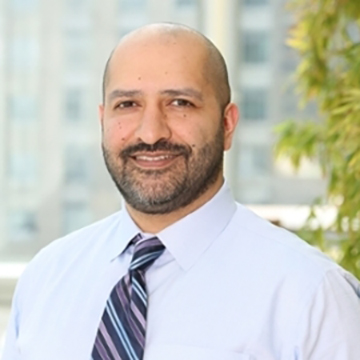
Divakar Mithal, MD, PhD is the faculty director for the Leadership and Management Strategies for Clinical Investigators course, co-organized by the NUCATS Institute and Northwestern’s Kellogg School of Management. The course, heading into its eighth year, is a four-day program designed for faculty members who are building their research program. Topics include practical and effective approaches organizational culture, strategic time management, feedback and persuasion strategies.
In the following Q&A, Mithal shares more on the history of the NUCATS-Kellogg collaboration, what enrollees can expect from the course, and more.
What is your role for the course Leadership and Management Strategies for Clinical Investigators? How did you get involved?
I’m the faculty director of the course, so I help organize the curriculum and faculty experts who teach the subjects.
In 2020, I took the course as a first-year faculty member at the recommendation of Phil Hockberger. He's now retired, but he was instrumental in launching this course.
I found the curriculum very interesting, but I got the sense that the clinicians in the group were getting less out of it, while the basic scientists in the group were getting more out of it. So, I asked, “have you thought about how the clinicians in the course absorb this material?” From there it kicked off a rethinking of some of the premises of the course and the way the course is designed. I really wanted physician-scientists to have this skill set of leadership and management, but I didn't know anything about it - I took the course myself to learn!
Is there a specific type of researcher or scientist that you think would benefit most from this course? Who would you recommend enroll in the course?
The course was initially aimed at early-career faculty, but we're very inclusive at this point: We just want faculty who like this idea to come and participate.
We noticed that people were coming in who did not have a PhD, but had acquired research skills during their fellowship and early faculty years and were seeking the same kind of guidance.
That really opened the door to clinicians, anybody who interacts with patients, sees patients, such as specialties like psychology, social work, speech-language therapy, physical therapy, and so on. Even people who don't have a direct connection with the patients themselves but do patient-facing research; those that are running clinical trials that might be PhDs, or people that are running clinical research programs that are focused on patients, they interface with a lot of people who deal with patients all the time.
The course is meant to help faculty see how this all comes together, and that we all must play within the rules of the structure that we're in. It’s designed to get you to think, “What do I need to do to bring forward the success of my trainees, of my colleagues, of the people around me, and ultimately all the people that will define my own success?”
What can enrollees expect to learn when they sign up for the course?
The course is rooted in what we consider three phases.
The first phase is that everyone has leadership skills – they just might not all look the same. Leadership is not a one-size-fits-all concept. We help you figure out what your leadership qualities are and how you can maximize them. What are the things that are getting in the way of you being the kind of leader you can be? The beginning of the course is really establishing this concept that leadership is for everyone.
The second phase of the course is about influencing, leading and managing people. Everyone is different, so how do you start to express that leadership in a way that's effective and true to you. Understanding how to share your vision and your goals is going to be different depending on the audience you seek - there's no question that being able to diversify your approach to sharing your knowledge is really important.
The last phase is about looking forward and saying, “I can do this, but how do I build something that's more sustainable?” How do you build something that is what you want in terms of the vision for this research, for the research program that you believe in? This last phase is meant to help see how you are no longer doing this for yourself, but have to build a group, team or even organization to sustain your goals. That requires leadership and management!
There's no complete answers to any of this - the course is about getting people to start thinking about actionable things that they can do right now in their career. There are leadership qualities that we can help you build, and you can start to build out on your own. There are cultural and communication aspects to running a lab that are unique to physician-scientists and clinician-scientists, but are also generalizable.
How does the partnership between NUCATS & Kellogg inform the content of the course?
NUCATS has been incredibly supportive in this – they recognize these managerial skill gaps often seen in clinicians, but realize that while there are many faculty who can give you their own experiences, they aren’t experts in leadership and organizational skills specifically. That’s where being part of a world-class university like Northwestern is a huge boon: we have these experts right down the road with Kellogg.
Going back to Phil Hockberger, the relationship between NUCATS and Kellogg really came through him about a decade ago. Phil built a relationship to provide a Core Facility course, and in doing so, he identified Kellogg faculty that were motivated to help out at Feinberg. These faculty teach at Kellogg and then are usually at Fortune 500 companies doing consulting, or they have startups, honestly, they have all kinds of other stuff going on. However, they’re motivated to help out in the medical research world that is outside their normal environment.
NUCATS’ involvement makes it very clear that this is something that we value at Feinberg, and Kellogg's branding of being the content experts gives it added validity. It’s a great and unique partnership.
"There is no template for where we are now — but the tools to succeed are embedded in courses like this one. We want to inspire people to remain deeply engaged in science and in research."”
What sets this course apart from other leadership courses?
Most leadership courses in medicine and science are run by medical or research faculty who are telling you how to be successful in their field. They are giving you leadership content that is related to your experience to some extent, but it’s not based on an area of expertise. They run a course because they've been successful in their field and that success gives them a platform.
Our course is taught by Kellogg experts in leadership, feedback, organizational culture, hiring dynamics and so on. These are people that spend their lives researching these topics and making organizations better, and they do it from an academic perspective, not purely a business perspective. NUCATS recognizes that these experts can help us get better at these specific skills which is, I think, a unique and valuable thing.
Has anything about working on this course surprised you?
Every year I'm amazed at the diversity of faculty at Northwestern in terms of where they're starting from and what they're expecting from this course. It's so rewarding to meet people from all over campus and to watch them meet like-minded individuals who are seeking this guidance; everyone in the room is just trying to be a better academic, and this course is something that they view as valuable to that process.
What I really appreciate is we all get in the room together, and everyone's different, and then within a few days, there's this dynamic of true academic participation in content that they did not have in their lives previously, and you can see it. You can see people's gears grinding as they think deeply about new ideas, and in this case the ideas are meant to help them get better at their own careers, no matter what their scientific or medical specialty might be. That’s really fun in an academic space like Northwestern.
Are there any unexpected takeaways enrollees might get from the course?
I think with the way funding has changed dramatically over the last few years, it’s easy to overlook the skills we are promoting in this course, and to say this is secondary to the primary mission, which is to be a great scientist and a great clinician.
And I would say to that: Maybe also think about what other skills you need to succeed. Who's going to figure out how to solve the new funding environment we live in? Is it going to be the established researchers who've never had to deal with this change? Or is it the people who are going through it now, whose future careers will be shaped by today, who must carve new pathways forward and find ways to connect with the community, to connect with patient populations, to connect with advocacy groups? What skills do you need for that and did you learn those when you were in medical or graduate school?
There is no template for where we are now — but the tools to succeed are embedded in courses like this one. We want to inspire people to remain deeply engaged in science and in research, and this is one way to help with that.
The 2027 offering of Leadership and Management Strategies for Clinical Investigators will take place May 10-13, 2027.
See what past enrollees have said about the course here.
Learn more about the course and how to enroll here.
Written by Kevin Castro