Northwestern Graduates Named CBC Entrepreneurial Fellows
Three early-career scientists who recently completed their PhDs at Northwestern University Feinberg School of Medicine have been named Chicago Biomedical Consortium Entrepreneurial Fellows.
Since 2006, the Chicago Biomedical Consortium (CBC) — launched to stimulate collaboration among scientists at Northwestern, The University of Chicago, the University of Illinois Chicago, and other Chicagoland institutions — has accelerated the path from academic discovery to patient impact.
Through its Entrepreneurial Fellows (EF) program, the CBC is developing the workforce required to execute early-stage biopharma programs — program strategy, IP, regulatory, and BD literacy. The program provides structured training in biotech development, project management, and translational strategy, building a local pipeline of skilled operators who can grow the ventures as they scale. Nine of 23 CBC Entrepreneurial Fellows have earned their PhDs at Northwestern.
“The EF program exposes our fellows to real-world institutional experience and builds connections to the Chicago ecosystem. Fellows come from across the country to train with us because of the exposure to industry expertise and their commitment to staying and building in Illinois after their fellowship is over,” says Michelle Hoffmann, PhD, executive director of the CBC. “By generating cohorts of diverse bio-entrepreneurs who have the training and network that is often restricted to coastal hubs, the EF program encourages and supports Illinois biotech startups originating from Illinois university innovations.”
Last year, Entrepreneurial Fellow Lucas Shores PhD, spun out work from the lab of Bill Muller, MD, PHD, that was funded by the CBC into the company Laborecom. He’s now continuing his journey as a Q Fellow at Northwestern’s Querrey InQbation Lab.
Meet Fellows from This Year’s Cohort
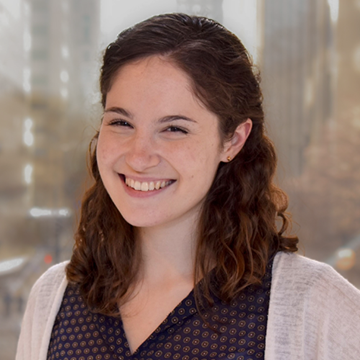
Taylor Brown, PhD, is a regenerative engineer who earned her BS and PhD in Biomedical Engineering at Northwestern University. Her doctoral work in Bin Jiang’s lab explored new vascular therapies inspired by the way sympathetic nerves naturally regulate vascular smooth muscle cells. She has experience working with small molecules, biomaterials, and medical devices to develop healthcare solutions that enable the body to regenerate itself. Alongside her research, Brown has built skills in science communication, commercialization, and mentorship. Her internship experiences at Baxter (2018) and Dimension Bio (2023) informed her decision to pursue a career in biotechnology.
I have already learned so much in the few months I have been working with the CBC. I am improving my skills in diligence research, project management, and business development”
“I have already learned so much in the few months I have been working with the CBC. I am improving my skills in diligence research, project management, and business development,” says Brown. “Becoming more involved in the Chicago biotech community has also allowed me to network with other entrepreneurs and scientists, further informing the type of roles I’ll seek out in the future. One of my favorite parts of the program is collaborating with the other fellows and learning from their expertise.”
William Corcoran, PhD, is a biological engineer with a background in synthetic biology, protein engineering, and cell therapies. He earned his PhD at Northwestern University in Biology, where his research focused on engineering receptors for applications in cell therapies. During his PhD he worked with Northwestern’s Innovations and New Ventures Office, ARCH Venture Partners, and ARTIS Ventures to evaluate and build early-stage therapeutics companies. Prior to pursuing his graduate studies, he earned a BA from Carleton College in Biology and held various roles at Amyris creating renewable products through metabolic engineering.
I hope to get a much better understanding of the commercial perspective on academic innovations and how we can improve the success rate of those starting up in the Chicagoland area.”

“As a PhD student, you learn how to answer scientific questions and build the experimental skill set to do so, but you don’t spend much time thinking deeply about the potential commercial aspects of your technology,” says Corcoran. “I hope to get a much better understanding of the commercial perspective on academic innovations and how we can improve the success rate of those starting up in the Chicagoland area.”
Cristina Vaca, PhD, earned her bachelors in Biochemistry from the University of Pennsylvania and her PhD in Microbiology & Immunology from Northwestern Feinberg School of Medicine. Her thesis work in the laboratory of Richard D’Aquila focused on developing novel functional cure strategies for HIV by studying the biology of HIV viral rebound.

The CBC has a very rigorous framework for evaluating potential therapeutics and practicing these analytical skills I think will be useful in my career down the line”
During her PhD, Cristina also led the research team at Nucleate Chicago—a student-run accelerator program that educates academic trainees in biotech commercialization and on how to turn their technology into a life science startup.
“I was very excited to become an Entrepreneurial Fellows. I was involved in the biotech start up space during my time in graduate school and I’m very excited to be joining the CBC and spend my time evaluating and working with local therapeutic startups full time, says Vaca. “The CBC has a very rigorous framework for evaluating potential therapeutics and practicing these analytical skills I think will be useful in my career down the line.”