Track Statistics in Manuscripts with New Research Reproducibility Software Program
Many authors know what it’s like to see numbers start to blur after manually copying results into a manuscript, or tracing back through statistical output trying to find the right result to insert. Not only is this process inefficient and frustrating, but it can lead to mistakes that could hinder the development of scientific discoveries. A team of Northwestern University Clinical and Translational Sciences (NUCATS) Institute researchers have created a software program called StatTag to combat the nature of human error. The program connects Microsoft Word to the popular data analysis programs R, SAS, Stata, and Python in order to make research more efficient and more easily reproducible.
“StatTag is the first broadly accessible, user-friendly tool to connect statistical output to Word,” says first author Leah Welty, PhD, professor of Preventive Medicine in the Division of Biostatistics, professor Psychiatry and Behavioral Sciences, and director of the Biostatistics Collaboration Center. “We’ve seen that a lot of people in Feinberg and beyond use Microsoft Word because it’s their preferred software to write manuscripts and reports. We wanted to make it easier for these users to insert and update statistical results.”
A manuscript describing StatTag’s design, development, and use was published in JAMIA Open, an open-access, peer-reviewed publication of the American Medical Informatics Association. Welty was joined by co-authors Luke Rasmussen, MS, Preventive Medicine in the Division of Health and Biomedical Informatics; Abigail Baldridge, Preventive Medicine; and Eric W. Whitley, Preventive Medicine. StatTag represents an important collaboration between NUCATS resources in both biostatistics and health informatics.
Welty, a collaborative biostatistician, was motivated to create this program by her own struggles with copying results from statistical output. She created several presentations to draw awareness to this issue, and serendipitously Rasmussen was in the audience with the skills and knowledge necessary to create a solution. They were able to garner funding for the project as part of the CTSA award to Northwestern University.
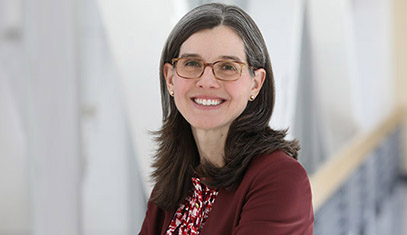
Leah Welty, PhD

Luke Rasmussen, MS
Rasmussen says that StatTag was modeled after other Word “add-ins” like Zotero and EndNote that are accessible from a tab in Word’s ribbon toolbar. Developing StatTag for Windows was relatively straightforward, but the team encountered challenges when creating a version for macOS. Whitley, the project’s lead macOS developer, was able to make StatTag interact with Word, but for technical reasons required StatTag to exist as a separate application for the macOS version of the program.
Welty and Rasmussen recommend StatTag to all levels of investigators, from highly experienced statisticians to clinicians with limited experience with statistics. StatTag reduces the risk of human error when re-typing or copying and pasting numbers from statistical output into Word documents, and even has a feature that makes it possible to see the statistical code that generated a value in a manuscript.
“It’s a little bit of learning for a big payoff in terms of reproducibility and efficiency,” says Welty. When used effectively, StatTag can embed results directly from data analysis programs (R, SAS, Stata, or Python) into a Word document and is able to update the results with a click of a button. Baldridge worked to create a suite of StatTag educational videos and an online course to teach researchers about the program.
StatTag’s greatest value clearly lies in its ability to facilitate reproducibility of a study, the research team says.
“Reproducibility is about making research more efficient, as well as more robust,” says Welty. “There are a lot of different aspects – from data provenance to writing good statistical code to making sure numbers in a manuscript match statistical output. StatTag addresses one part of this pipeline, but there are many challenges and a growing set of tools to make every part of research more reproducible.”
And what lies ahead for the StatTag team? They’re already at work on their next project: StatWrap, another open source program aimed at making collaborative medical research more efficient and robust.
Written by Morgan Frost