Leading Translational Science in Rehabilitation Medicine with Michael Ellis, PT, DPT
Bridging the gap between rehabilitation research and patient care is part of what Michael Ellis, PT, DPT does as Northwestern Medicine's inaugural director of translational rehabilitation research. In this episode of “Science in Translation,” Ellis discusses the future of rehabilitation research, shares lessons from a groundbreaking stroke recovery clinical trial he is conducting, and explains how collaboration and implementation science can accelerate better outcomes for rehabilitation patients.
Subscribe to Science in Translation on Apple Podcasts, Spotify, or wherever you get your podcasts.
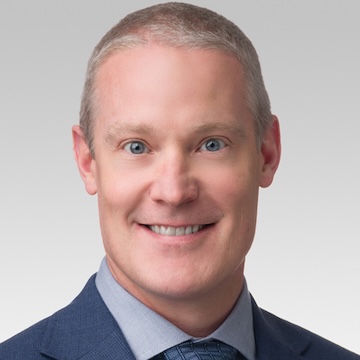
Chicago is really an epicenter for rehabilitation research. The infrastructure in place to not only provide mentorship but all of these resources, especially those provided by NUCATS, makes this one of the best places to be.”
Michael Ellis, PT, DPT
Professor, Physical Therapy and Human Movement Sciences, Physical Medicine and Rehabilitation
Director of translational rehabilitation research, Northwestern Medicine
Read the Full Transcript
[00:00:00] Erin Spain, MS: Welcome to Science in Translation, a podcast from NUCATS, Northwestern University Clinical and Translational Sciences Institute. I'm your host, Erin Spain. Today's guest is helping expand what translational science looks like in the field of rehabilitation research. Dr. Michael Ellis is the inaugural director of translational rehabilitation research at Northwestern Medicine. This role is part of a shared strategic vision of Northwestern Memorial HealthCare and Northwestern University Feinberg School of Medicine. In this newly created role, he is building partnerships between scientists and clinicians to help move rehabilitation discoveries into everyday patient care. He is also a professor in the Department of Physical Therapy and Human Movement Sciences at Feinberg and a member of the NUCATS Hub Liaison Team. Today we will discuss how these partnerships are advancing translational and implementation science in rehabilitation, and what this model could mean for the future of collaborative research. Dr. Michael Ellis, thank you for being on the show today.
[00:01:11] Dr. Michael Ellis: Thank you for having me.
[00:01:13] Erin Spain, MS: You are the first director of translational rehabilitation research at Northwestern Medicine. This role sits at the intersection of research and clinical care. Why did this role evolve? Why was it created?
[00:01:26] Dr. Michael Ellis: It came as part of a larger strategy within the Northwestern University Department of Physical Therapy and Human Movement Sciences, where I am a professor. For many years, we have been collaborating with Northwestern Medicine, both through education and clinical practice. One of the things that was missing from this long-term collaboration was a more solidified research initiative. We started to work on creating a formalized academic partnership several years ago. We had all these great ideas for research initiatives, but we needed someone to help realize them. We started from the ground up, identifying the needs of our department and the health system, and created this role. It was a tremendous shift in my career, moving from a researcher and educator to being embedded in the health system with these new responsibilities.
[00:02:54] Erin Spain, MS: When people think about translational science, they often think about drugs, devices, or laboratory discoveries. What does this look like in the rehabilitation space?
[00:03:07] Dr. Michael Ellis: It depends on the clinical setting. Rehabilitation takes place in the community, the home, hospitals, and outpatient clinical spaces. We can conduct research in any of those environments, and every space has its own challenges and opportunities. I have experience as a clinical trialist in hospital spaces, and I am now becoming more accustomed to what a research project looks like in telehealth, an outpatient clinic, or a community outreach program.
[00:03:57] Erin Spain, MS: You mentioned this wasn't exactly where you saw your career going. Why was it important to step into this role?
[00:04:07] Dr. Michael Ellis: The timing was perfect. My department chair explained the vision, and I initially was not interested. I was at a stage where I was about to launch a five-year NIH clinical trial. However, after thinking about it for 24 hours, I realized that at this stage in my career, I had already spent a lot of time mentoring clinicians interested in research. I realized this could be a great opportunity if I was afforded the time. It meant letting go of certain teaching responsibilities to dedicate time to this role.
[00:05:20] Erin Spain, MS: How did you begin working with NUCATS?
[00:05:26] Dr. Michael Ellis: I had been aware of NUCATS for a long time. When I came into this role, I had interactions with the director of NUCATS regarding authorizing clinicians to be principal investigators on research projects. I invited him to tour the Department of Physical Therapy and Human Movement Sciences to see our work. During a meeting with my chair, Dr. Jules Dewald, the NUCATS director suggested I join the Hub Liaison Team. He realized they lacked that specific representation within Northwestern Medicine, particularly in rehabilitation services. It was a perfect fit.
[00:06:23] Erin Spain, MS: As a member of that Hub Liaison Team, you bring together academic and clinical partners like Northwestern Medicine, the Shirley Ryan AbilityLab, and Marianjoy Rehabilitation Hospital. You’ve mentioned that this team helps create connections that wouldn't happen otherwise. Can you talk about the barriers that exist in large academic institutions and how intentional relationship-building accelerates translational science?
[00:06:51] Dr. Michael Ellis: There are many barriers, but this Hub Liaison Team is a major facilitator. One challenge is avoiding a competitive mindset. We have different interests—for example, an investigator in the university compared to a clinical specialist in a health system. We are at a pivotal moment, though, where people are embracing collaboration rather than protecting their patient populations or scientific ideas. As a principal investigator, a big challenge is meeting the needs of team members with different expertise and expectations—such as engineering faculty or physician-investigators—who are at different stages in their career progression.
[00:08:24] Erin Spain, MS: You have described your work as extending foundational neuroscience discoveries into real rehabilitation settings. A good example is your recent preclinical study. Could you walk me through that journey?
[00:08:44] Dr. Michael Ellis: The idea started decades ago. We took a mechanistic approach to understand why individuals who have a stroke are left with persistent, chronic movement problems in their arm. We worked to understand the neural mechanisms, and eventually, we realized it was time to move this into a clinical space. We developed an intervention in our labs, but we wanted to see how it worked when implemented early in recovery. We successfully acquired funding for an inpatient rehabilitation clinical trial in 2019, partnering with a clinical team at the Shirley Ryan AbilityLab. Unfortunately, the pandemic delayed us for about a year and a half. We finally enrolled our first person in 2021. During the last two years of recruitment, we needed another partner, and the timing aligned perfectly with our new academic partnership with Northwestern Medicine and the Marianjoy Rehabilitation Hospital. That allowed us to expand the trial within our larger academic medical center. We are now finishing up the final patient follow-ups.
[00:11:30] Erin Spain, MS: What does it take to implement a trial like this in a busy clinical setting?
[00:11:39] Dr. Michael Ellis: First, you need support at the executive level. You need leadership buy-in. Second, you need clinicians on the ground who are embedded in the hospital, know the system, and know the people. They must be part of the research team to be effective.
[00:12:20] Erin Spain, MS: Where do things stand right now with the trial?
[00:12:28] Dr. Michael Ellis: We are targeting individuals who are expected to have persistent, severe arm motor impairments. We use robotic devices to target an impairment called “flexion synergy.” The device allows us to provide limb-weight support, which lets patients reach into their range of motion. As they improve, we systematically increase the load they are lifting against. We follow them for 12 months post-discharge to see if we have impacted their recovery trajectory. We are almost finished with the 12-month follow-ups, and while we have published the protocol, the final outcome paper is still in progress.
[00:17:36] Erin Spain, MS: How does this protocol impact a patient's day-to-day life?
[00:17:40] Dr. Michael Ellis: In our previous work with chronic patients, we demonstrated that this intervention improves range of motion against heavier loads—tasks like pulling a gallon of milk out of the refrigerator. Participants also report functional improvements, such as putting on a winter coat more easily or using both arms to push open a heavy revolving door. These are meaningful improvements that encourage patients to get out into the community because they feel stronger.
[00:19:57] Dr. Michael Ellis: There is a tremendous opportunity to train ambitious clinicians who want to engage in research. I am approaching this by trying to train them to be effective research partners and, for some, independent investigators. We are working to change the culture toward “academic rehabilitation,” where clinical practice includes scholarly work—from case studies to clinical trials.
[00:22:43] Dr. Michael Ellis: Chicago is an epicenter for rehabilitation research. There is huge support for mentorship here, and we need mentors throughout our entire careers. The infrastructure, especially the resources provided by NUCATS, makes this one of the best places to be.
[00:26:38] Dr. Michael Ellis: You're very welcome. Thank you for having me.
[00:26:41] Erin Spain, MS: Subscribe to Science in Translation wherever you listen to your podcasts. To find out more about NUCATS, visit our website at NUCATS.northwestern.edu.